Anthony R. Green on AMP Commission “Under a Soprano Sky”
Interview
3/17/26
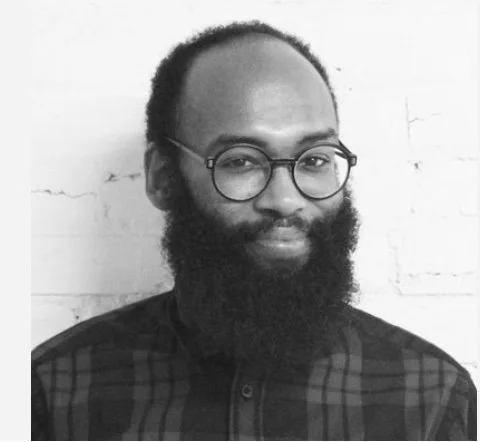
AMP interviewed composer Anthony R. Green about his piano piece “Under a Soprano Sky” based on the titular poem by Sonia Sanchez. “Under a Soprano Sky” was commissioned by AMP for American Mavericks Project Vl. 1: Quest—a celebration of Black Arts Movement poetry through the lens of new piano music. Quest will premiere on March 20th at the DuSable Black History Museum in Chicago.
You say that the opening melody of “Under a Soprano Sky” can be sung to the words of the poem. What was your intention behind this? How did the rhythm and cadence of the poem influence the piece?
Often times when working with text, it can be difficult to attach rhythm to the words. Spoken text is not regular, thus composers are tasked with imposing regularity upon an otherwise impromptu medium. With "Under a Soprano Sky", almost the reverse was done. As the text isn't spoken in this work for solo piano, I decided to take the natural rhythmic indications of the text and impose that onto a piece for solo piano, adjacent to works like Mendelssohn's Songs Without Words or even some of the more lyrical solo piano works by Schubert (Impromptu op. 90 nr. 3) or Chopin (most of the Nocturnes). Most of the melodic content - about 85% - utilizes the natural rhythm of the poem's text, and this helped me shape the emotional narrative of the music, as well as the rhythms throughout the two movements.
How do you interpret “Under a Soprano Sky” and what about it resonates with you? How were you able to “translate” its meaning through music?
For me, the poem is primarily concerned with two teloses : establishing a surreal atmosphere and imbuing Black feminism into surrealist literature. Movements such as surrealism, absurdism, existentialism, expressionism, futurism, and other speculative approaches to text are DOMINATED by cisgendered men who are not Black or people of color. To firmly claim space and hold presence in these artificial artistic words, more Black people and people of color must create content in these styles, but imbued with other perspectives. The result is the beauty we find in "Under a Soprano Sky".
Sanchez places a strong emphasis on art as a tool of resistance and expression. Your art often comments on many issues related to social justice. Can new music still inspire and be a powerful avenue for social and political commentary in today’s climate?
I believe that today, even more so than ever, music has this power. More and more children and youth are practicing music as movements are making it more accessible. Because of this, the more established generations of artistic practices have a moral responsibility to not only shape the world that upcoming generations are entering, but also to help these generations create worlds that are MORE supportive, MORE equal, MORE just than the worlds we currently occupy. I believe this is possible, and I work with all my blood and bones to do this and to encourage others to do this as well.
Have you ever used a poem as inspiration for an instrumental piece? How does it differ from setting words to music? What (if any) are the challenges?
One of my relatively recent works, Collide-oscope V for flute, clarinet, violin, viola, and cello, uses the poem Let the Light Enter by Frances Ellen Watkins Harper as a very loose inspiration. The poem references Goethe's last words - a plea for more light as he was dying. The music, then, takes on this journey of "light" and "dark" opposing sonic dichotomies, and the ending is riddled with disjunct glimmers. When I set a text, I more or less analyze the text first for its musical qualities and have the text govern the majority of the elements of the composition. When using text as inspiration, the text more often than not just sets a tone for the mood and the narrative of the piece, but I have much more wiggle room with the content. For me, the biggest challenge is choosing the text! There are too many great literary works, and I would love to work with them all in some capacity!
What projects are you currently working on and what’s next for 2026?
I currently just finished a viola concerto for the Louisville Orchestra that will be premiered in March, and I am finishing up a 20-minute orchestra work that will be premiered in April (also by the Louisville Orchestra) called "Two Orchestral Sketches". The first is titled "E(motional) R(ollercoaster)", and it is an abstract commentary on the current emotional extremities of today's socio-political environment. The second movement is a meditation, inspired by a poem by the Dutch poet Herman Gorter - a symbolist poem that speaks of gold-shimmering darkness. After this, I will compose an Italian song cycle using text by Teresa Bandettini, a piece of music theater for toy piano, movement artists, and a "house" (noises that can be made from elements within and of a house), a piece for viola and piano for Castle of our Skins, and a saxophone concerto about the LGBTQIA+ experience.
~~~
To Learn more about Green and his music, visit his website:https://www.anthonyrgreen.com/