Regina Harris Baiocchi on AMP Commission “Piano Broadsides”
Interview
3/11/26
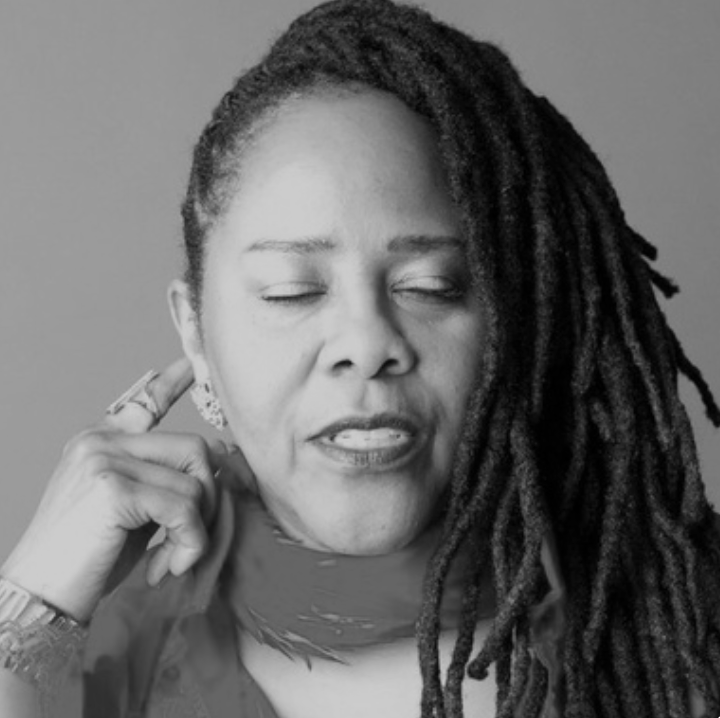
AMP interviewed composer, poet and artistic director Regina Harris Baiocchi about her piano suite Piano Broadsides: i. A Poet is Not a Jukebox, ii. Nocturne for Zasha, iii. Shape of the Invisible, inspired by Dudley Randall’s poetry. Piano Broadsides was commissioned by AMP as part of American Mavericks Project Vl. 1: Quest—a celebration of Black Arts Movement poetry through the lens of new piano music. Quest will premiere on March 20th at the DuSable Black History Museum in Chicago.
Dudley Randall was a multi-hyphenate: a poet, editor of Broadside Press and a translator. You also wear many creative hats as a composer, writer, and founder of the Haiku Fest and 6Degrees Composers. How has your immersion in the literary arts influenced your music, and vice versa?
My music and poetry come from the same well. My gospel song titled “Sometimes I Hear Voices” sums up my literary and musical relationships. Often when music plays in my head, I hear lyrics (or text). Likewise, often when poetry (or text) runs through my mind, I hear companion music or musical gestures.
You’ve had the opportunity to be mentored by the poet Gwendolyn Brooks and the composer Hale Smith, who you’re writing a biography about. How have your mentors enriched your artistic practice? What are the most important things you’ve learned from them?
I am grateful to have been mentored by Gwendolyn Brooks and Hale Smith. I learned economy from both master artists. If I can say something in a word, or a note, I avoid using two notes or two words. That is why I love haiku and other forms of micro poetry. A poet can pack a lot of expression into micro poetry.
Ms. Brooks inspired me to found Haiku Festival in 2004; and Hale Smith inspired me to found 6Degrees Composers in 2010. These two organizations allow me to kindle three loves: children, music, and poetry. Haiku Festival celebrates children through poetry and promotes literacy. 6Degrees Composers celebrates music by women composers and reminds the world of our contributions.
What about Dudley Randall’s poetry resonates with you? How were you able to “translate” your interpretations of the poems through music?
Dudley Randall’s poetry is whistle clean, i.e., has little “fat”. His writing blends formality and earthiness. His titles often distill the poem’s message. For instance, with “A Poet is Not a Jukebox,” readers can intuit Randall’s message from the title. The chanted title inspired me to “translate” the poem as a musical invention (canon or round). I quote a melody from my Spiritual (Cain’t See to Cain’t See) as thematic material for the first movement of Piano Broadsides.
In the second movement, “Nocturne,” I offer a delicate “translation” of Randall’s illusive yet strong message, use of personification, and other literary devices. Randall sculpts ordinary words to create an everyman storyteller. The poem’s persona speaks of love and his lover with the tenderness found in night dreams.
For the third movement, I “translate” one of Randall’s early poems, “Shape of the Invisible.” This title sets the mood but does not divulge the poem’s secret charm. Randall’s elegant, 16-word micro poem and its democratic wording beg to be a jazz-infused dance with the wind.
Have you ever used a poem as inspiration for an instrumental piece? How does it differ from setting words to music? What (if any) are the challenges?
Poetry often inspires my instrumental music. An example is Karibu (Kah-REE’-Boo). Swahili for “welcome,” Karibu was written at the death of my father. I wrote a poem titled “when” to jumpstart the music yet never set its words. With Karibu, Ancestors “welcomed Dad over home”.
I “translated” the poem to music, but it was just as important to convey the love I have for my Dad and our African roots. Those Black roots are reflected in the ebony wood used to make clarinets; and how the ebony resonates to create distinctive clarinet colors. Karibu calls for B-flat clarinet but has been played on all clarinet family instruments, trumpet, and tuba.
Writing instrumental music inspired by poetry is liberating because the composer is not confined by the words. It is liberating to set meanings, inferences, and not adhere strictly to prosody and other constraints. Yet the words’ stresses, rhythms, et cetera exist as safety nets.
What projects are you currently working on and what’s next for 2026?
Currently I am writing Hale Smith’s biography.I recently finished synesthesia, a flute miniature inspired by composer, pianist, and flutist Thomas Green (1849-1908) known as “Blind Tom” Wiggins. synesthesia was commissioned by flutist and composer Joshua Hahn and Castle Of Our Skins, a Black arts institution dedicated to fostering cultural curiosity and celebrating Black artistry through music. Joshua Hahn will premiere synesthesia at the Society of American Music’s Conference in Richmond, VA, March 12, 2026.
Juanita Hancock Smith, Hale’s wife, commissioned me to orchestrate one of Hale’s spirituals. I am truly honored to accept this commission.
~~~
To learn more about Baiocchi and her music, visit her website: https://reginaharrisbaiocchi.com/