interview: Jeremiah Evans
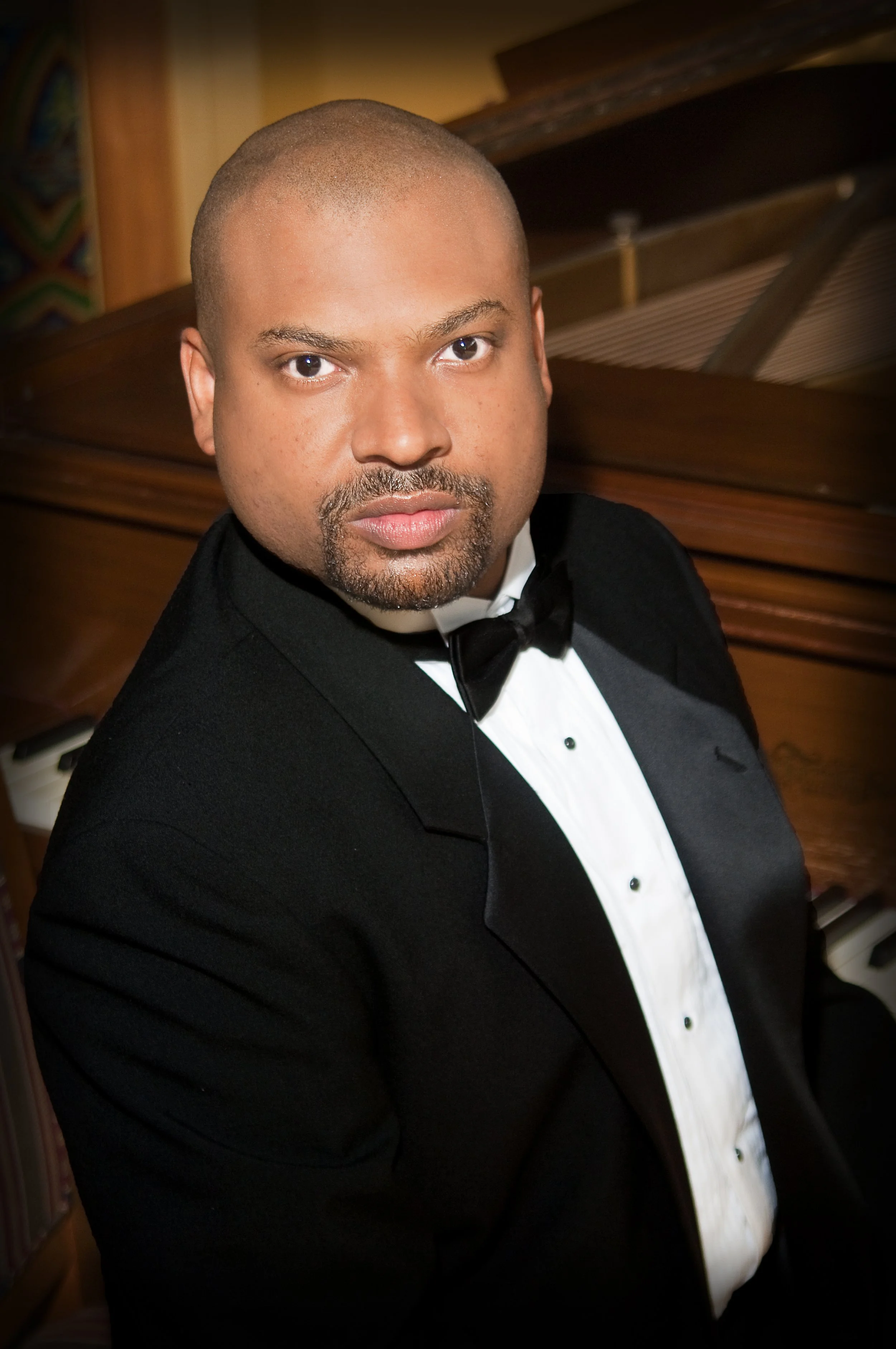
AMP interviewed composer Jeremiah Evans about his piece “Lyric Cartography,” based on the poem “Balboa, the Entertainer” by Amiri Baraka. AMP commissioned Evans to write “Lyric Cartography” as part of “American Mavericks Project Vl. 1: Quest,”— a celebration of Black Arts Movement poetry through the lens of new piano music. “Quest” will premiere on March 20th at the DuSable Black History Museum in Chicago.
Jeremiah Evans.. bio here
AMP: In “Balboa, the Entertainer” Amiri Baraka writes: “Let my poems/be a graph of me.” How are your compositions a “graph” of you?
JE: In two ways: 1) Music graphs an artist's intellectual and even spiritual essence. I feel that my music is the most accurate recording of my truest self, who I truly am inside. 2) As I think about Baraka's declaration, I reflect on all of the music that I have composed over time as a graph, or tracing of my physical presence as well.
AMP: “Balboa, the Entertainer" is one of Barak’s most “musical” and lyrical poems. Did you aim to capture the sound and rhythms of the poem in your piece?
JE: Baraka uses syncopation—placing emphasis on unexpected words or breaking lines in the middle of phrases that emulates the jazz music of the early 1960s. I decided early in the process to take a much more abstract approach to my musical interpretation of the poem rather than a literal echoing of the specific jazz rhythms of the poem in an exclusive capacity. I was drawn to the vivid imagery in the poem as well as the element of tension Baraka presents between his lyric self hood and his role as a poet of "The People". This tension is interpreted throughout the piece, with contrasting sections of music woven together, each section representing elements or themes from the poem.
AMP: How do you interpret the poem and what about it resonates with you? How were you able to “translate” its meaning through music?
JE: Overall, I interpreted the poem as a commentary on the artist's responsibility to seek a more engaged and authentic voice, thereby fostering genuine connections with others. This resonated with me within the context of my own composing. Throughout my music composition journey, I have composed music that was created solely for superficial entertainment, which I have loved. However, the poem presented the opportunity to connect with audiences on a much deeper level. More specifically, the poem explores the poet's personal and artistic identity in relation to his public function as a poet of 'the people.' Lines 15 and 16, "now, the lights are off, to myself,/as a lover, or at the cold wind.", convey isolation and introspection. In response to Barak's vivid imagery in these lines, I envisioned the poet trekking across cold, desolate terrain while questing after creative fulfillment and meaning through reflective self-exploration. This formed the overall conception of the composition. In need of music that evoked solitude, alienation, a cold environment, and movement, I thought of quoting Debussy's Footsteps in the Snow from his Preludes, Book 1. Motivic material from the Debussy Prelude reoccurs from measures 69-88, this time presenting a full statement of the opening few measures of the Prelude in measures 77-84. The opening lines of the poem—"It cannot come / except you make it / from materials / it is not / caught from..."—imply that the creative process necessitates originality, genuine creativity, and meaningful engagement rather than a passive pursuit of traditional artistic practices or bor-rowed forms. Throughout the piece, there is a deliberate and consistent pulling away from the Debussy prelude in search of this authenticity. This represents a disengagement from Euro centric conventions and borrowed forms that are detached from real-world struggles. The music's transition away from Debussy underscores Baraka's quest for a more resisting voice, as well as a more fluid and improvisatory mode of expression. "Let my poems be a graph/of me. (And they keep/to the line where flesh/drops off...". Inspired by these lines, I devised the "graphic tracing" of a linear, single-line texture, which is meant to represent the poet's mind in motion, first appearing from measures 29-49, then recurring in measures 91-113. Further along in the poem, the phrase "You will go/blank at the middle. A/dead man." was interpreted from measure 60, or a bit before, with a very improvisatory section in which the music seems to lose its way. The music collapses off the piano with a bravura passage down the keys. This section of the poem conveys the loss of, or disconnection from, true identity, culture, and/or purpose in pursuit of conformity as an "entertainer". Early in the piece, fragments of jazz and a recurring 6-note motive can be heard, which coalesce near the music's end in the style of a soft and expressive jazz ballad. This meditative, balladstyle ending aims to reflect the introspective, philosophical, intensely personal, and disarmingly quiet intensity found in the poem. It also evokes the shared experiences and identity with African American people and culture. The musical language of the concluding lines was almost instructive: "But/die soon, Love. If/ what you have for/yourself, does not/stretch to your body?s/.end. /(Where, without/ preface,/ music trails, or your fingers/slip/from my arm". Resonant harmonies are splayed across the keys, from the bottom to the top. The sense of finality that is evoked in the closing lines adds urgency to the poet's plea for unrestrained self-expression.
AMP: Have you ever used a poem as inspiration for an instrumental piece? How does it differ from setting words to music? What (if any) are the challenges?
JE: I used Robert Frost's poem, titled "Fire and Ice", as the inspiration for my Two Nocturnes for piano. Frost's poem expresses a fin de siecle mood and contrasts two distinctly destructive characteristics of our human nature that each foretell the end of our world. "Fire and Ice", and the Two Nocturnes, feel more relevant today than I initially had anticipated, as alarming and shocking headlines seem to appear each day.
AMP: What projects are you currently working on and what’s next for 2026?
JE: I have several projects planned for the coming months, including finishing up my Concerto for piano and string orchestra, which has been a labor of love. I sketched the Concerto while I was a student at Texas Tech University, studying with Mary Jeanne van Appledorn. After moving back to Dallas, I lost track of the score. Almost two years ago, I found the piece at the bottom of my scrap heap, which consists of large plastic storage tubs containing every sketch, unfinished piece, or discarded idea (I was given the best advice from my very first composition teacher in high school to "save everything"). Since rediscovering the piece, I have been slowly revising it, and it is nearing completion. Additionally, my Three American Bagatelles for piano have been selected as a test piece for the Janice Kay Hodges Contemporary Piano Competition in San Antonio, Texas. I will be adjudicating the competitors early next month. This season, my music is also part of pianist Kris Carlisle’s "The American Evolution: LGBTQ+ Voices Project," a concert series showcasing music by LGBTQ+ composers. I am excited for unexpected opportunities that may be just around the corner.